
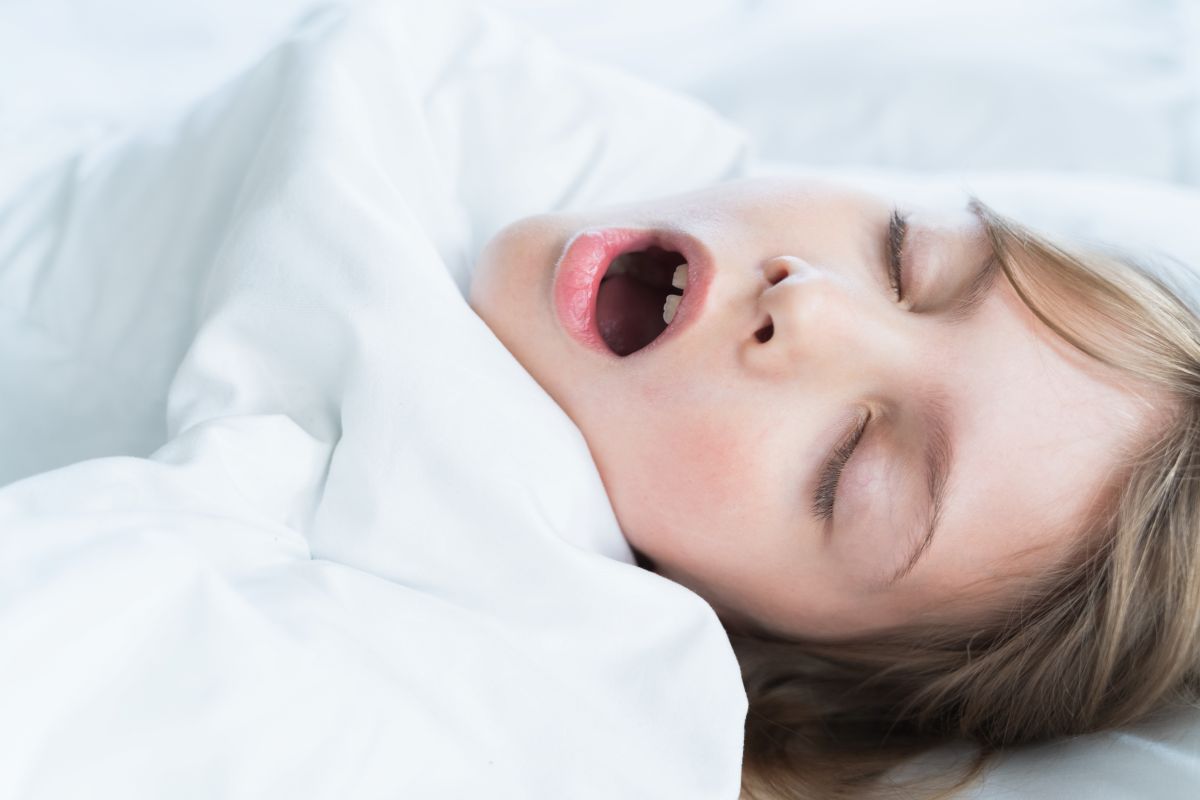
You lie awake listening to your child breathe. The sound is unmistakable — a low rumble, sometimes a snort, maybe a pause that makes you hold your own breath until they start again. You’ve been told it’s normal. Kids snore. But something in your gut says it’s not quite right.
Your gut is worth listening to.
As a biological dentist in North Austin, I see children — and adults who were once those children — whose bodies carry the long-term effects of disrupted sleep and disordered breathing. Snoring in children is rarely just noise. It’s a signal. And in many cases, the solution isn’t something a pediatrician or ENT will offer first. It’s something a dentist can address.
Is Snoring Normal in Children?
Occasional snoring — when your child has a cold or seasonal allergies — is common and usually resolves on its own. But habitual snoring, meaning it happens three or more nights per week, affects an estimated 10–12% of children and is considered a red flag for something called sleep-disordered breathing (SDB).
Sleep-disordered breathing is an umbrella term that includes everything from simple snoring to obstructive sleep apnea (OSA), where a child’s airway partially or fully collapses during sleep, causing them to stop breathing momentarily before waking slightly and starting again.
Key stat: Up to 3% of children have obstructive sleep apnea. Many more have milder sleep-disordered breathing that still significantly impacts their development, behavior, and health — and goes undiagnosed.
What Causes Children to Snore?
Snoring happens when airflow through the mouth and throat is obstructed. In children, the most common causes include:
- Enlarged tonsils or adenoids — the most frequently cited cause; these lymph nodes can obstruct the airway during sleep
- Mouth breathing — when a child habitually breathes through their mouth instead of their nose, it changes the way the airway develops
- A narrow palate or underdeveloped jaw — a smaller jaw leaves less room for the tongue, which falls back into the throat during sleep
- Tongue tie — restricted tongue movement affects how the tongue rests, and a low tongue posture narrows the airway
- Obesity — excess tissue in the throat can obstruct breathing during sleep
- Nasal congestion or allergies — chronic stuffiness forces mouth breathing
The first four causes on that list are directly connected to the structure of the mouth and jaw — which is exactly why an airway-focused dentist is often the most qualified person to identify and address them.
Why Mouth Breathing and Jaw Development Matter
Here’s something most parents don’t know: the way a child breathes shapes the way their face and jaw develop.
The nose is designed to filter, warm, and humidify air. When a child breathes through their nose with lips closed and tongue resting on the roof of their mouth, that gentle upward pressure from the tongue helps widen the upper jaw and create space for incoming permanent teeth.
When a child breathes through their mouth, the tongue drops to the floor of the mouth. The upper jaw narrows. The face grows longer and more forward-leaning. The airway gets smaller. Teeth become crowded. And the cycle continues — a narrower jaw means less room for the tongue, which means a more obstructed airway at night, which means poorer sleep.
The mouth breathing connection: Chronic mouth breathing and jaw underdevelopment are among the most underrecognized causes of childhood snoring. Addressing them early — when a child’s bones are still growing and responsive — can change the trajectory of their health.
Signs Your Child’s Snoring May Be More Than Just Noise
Beyond the snoring itself, watch for these signs that your child’s airway and sleep quality may be compromised:
- Mouth hanging open during the day, not just at night
- Teeth grinding (bruxism) — a common response to an airway that feels restricted
- Waking frequently, restless sleep, sweating at night
- Dark circles under the eyes or a perpetually tired appearance
- Behavioral issues — hyperactivity, difficulty concentrating, irritability that looks like ADHD
- Crowded or crooked teeth developing earlier than expected
- A long, narrow face developing over time
- Bed wetting past the age it typically resolves
Many of these signs — particularly the behavioral ones — are frequently misattributed to attention or behavioral disorders when the root cause is sleep deprivation from disordered breathing.
What Can a Dentist Do About My Child’s Snoring?
At Bruno Integrative Dentistry, we look at the mouth and airway together — because they can’t be separated. During a comprehensive new patient examination, I evaluate:
- Jaw width and palate shape — a narrow, high palate is a strong indicator of mouth breathing and airway issues
- Tongue position and function — including whether a tongue tie is restricting movement
- Tooth alignment and crowding patterns — which reflect how the jaw has developed
- Signs of bruxism (worn tooth surfaces, jaw soreness)
- Airway photograph and 3D CBCT imaging when indicated
If I identify structural contributors to your child’s snoring, there are several approaches we may discuss depending on your child’s age and specific anatomy:
Palate Expansion
A palate expander — also called a maxillary expander — gently widens the upper jaw over time, creating more room for the tongue and opening the nasal passageway. In growing children, this can produce remarkable changes in both facial development and nighttime breathing. Research consistently shows palate expansion improves airway volume and reduces snoring in children.
Myofunctional Therapy
Orofacial myofunctional therapy (OMT) retrains the muscles of the mouth, tongue, and face to function correctly — including training proper tongue posture, nasal breathing habits, and lip seal. Think of it as physical therapy for the airway. It is often used alongside expansion appliances for maximum effect.
Tongue Tie Release
When restricted tongue movement is contributing to low tongue posture and mouth breathing, a simple frenectomy (tongue tie release) can dramatically change how a child breathes. This is a procedure we can discuss and coordinate appropriately.
Referral and Collaboration
We work collaboratively with ENTs, sleep specialists, myofunctional therapists, and osteopathic physicians when needed. If enlarged tonsils or adenoids are clearly the primary driver, we’ll say so and refer accordingly. The goal is the right treatment, not the one that happens to be in our office.
The Earlier, the Better
The most important thing I want parents to understand is this: childhood is the window. A child’s palate and jaw are actively growing and responsive to intervention in ways that an adult jaw is not. The changes we can make at age 7 or 9 that take six months may take years or surgical intervention to achieve at 25.
Snoring is not something to wait out. If your child snores regularly, struggles to breathe through their nose, or shows any of the signs listed above, please come in and let us take a look. The assessment itself is straightforward, and the peace of mind — either way — is worth it.
If you’d like to learn more about the treatment options available, read our guide on what airway expansion is and how it works. For adults experiencing snoring or sleep disruption, visit our Snoring & Sleep Apnea Solutions page.
Frequently Asked Questions
At what age should I be concerned about my child snoring?
Any habitual snoring — three or more nights per week — in a child of any age is worth evaluating. The younger the child when intervention begins, the more options are available and the faster results tend to come. We regularly see children from age 4 or 5 for airway assessments.
Does my child have sleep apnea if they snore?
Not necessarily — snoring and sleep apnea are related but distinct. All children with sleep apnea snore, but not all children who snore have sleep apnea. A proper evaluation, and sometimes a sleep study, is needed to distinguish between them. That said, even snoring without apnea can significantly disrupt sleep quality and warrants attention.
Will my child outgrow snoring?
Some children do outgrow snoring, particularly if it’s related to adenoids that naturally shrink in adolescence. But when snoring is driven by structural jaw narrowing and mouth breathing habits, those patterns tend to persist and worsen without intervention — and the window to address them most effectively closes as the child grows.
Is a palate expander painful?
Palate expanders cause mild pressure and some discomfort in the first few days after adjustments, similar to how orthodontic braces feel after a tightening. Most children adapt quickly. The expansion process itself is gradual and well-tolerated by the vast majority of kids we work with.
Can I address this at my child’s regular pediatric dentist?
Most general and pediatric dentists do not screen specifically for airway issues or offer expansion appliances and myofunctional therapy referrals. An airway-focused biological dentist like Dr. Bruno takes a different approach — evaluating the mouth as part of the whole-body health picture, including how breathing patterns affect development.
Ready to Have Your Child Evaluated?
If your child snores regularly, breathes through their mouth, or shows signs of disrupted sleep, we’d love to take a look. Call us at (512) 372-8484 or book online to schedule your new patient visit.
Ready to Take the Next Step?
Ready to experience whole-body biological dentistry? Our comprehensive new patient exam includes a full airway, jaw, and health assessment with Dr. Candace Bruno.
Book Your Visit