Tooth-Colored Fillings
Composite restorations can repair selected cavities or damaged areas while matching the tooth’s appearance.
11410 Jollyville Rd STE 3102, Austin, TX 78759
11410 Jollyville Rd STE 3102, Austin, TX 78759
Repair damage, protect useful tooth structure, and restore everyday function with carefully planned, tooth-colored dental care.
Comprehensive care with an airway focus in North Austin.
A cracked, worn, or decayed tooth does not always need the same solution. At Bruno Integrative Dentistry in North Austin, Dr. Candace Bruno considers the location and extent of damage, remaining tooth structure, gum health, and your symptoms before recommending restorative dentistry.
Our biomimetic approach emphasizes preserving healthy structure and choosing bonded restorations that suit the tooth’s needs. Options include tooth-colored fillings, ceramic inlays or onlays, and crowns when more extensive coverage is appropriate.
Dr. Bruno also considers jaw function and signs of tooth wear. Grinding or clenching does not automatically mean sleep apnea, but associated breathing or sleep symptoms may warrant an airway-focused evaluation alongside the dental plan.
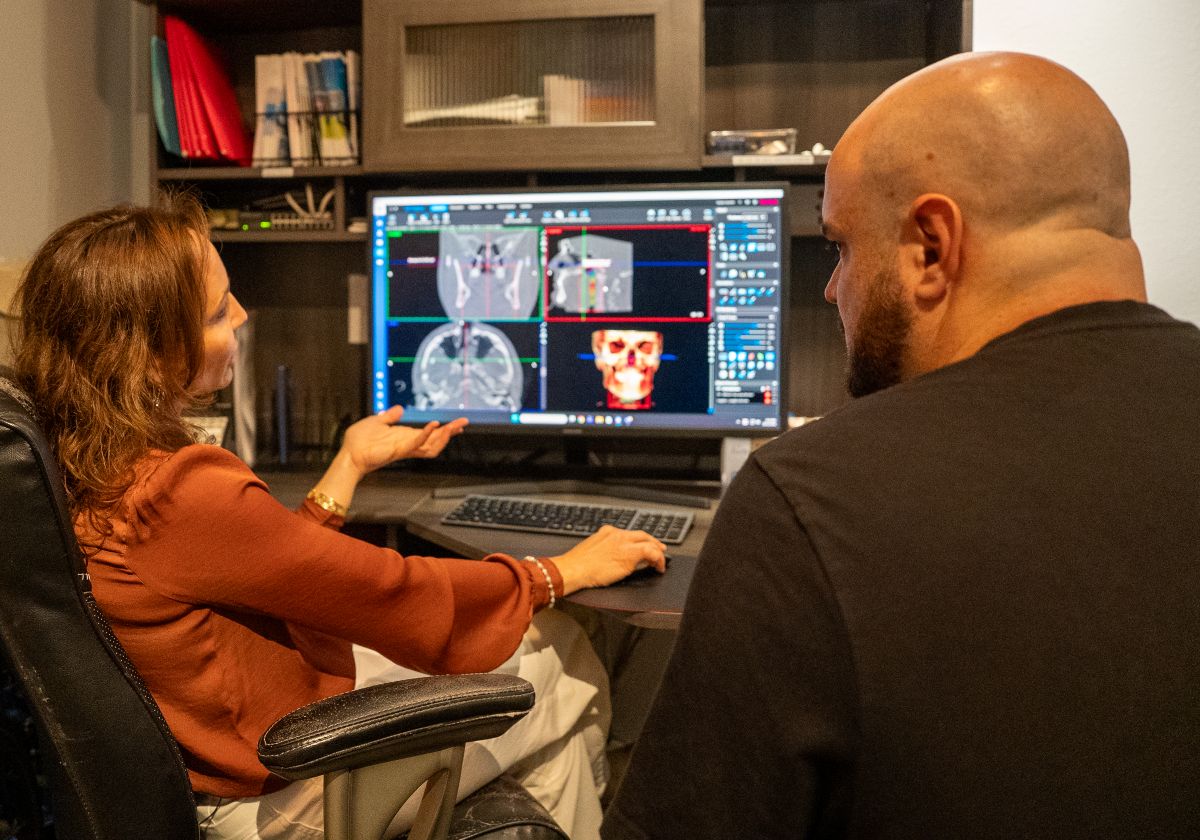
Assess decay, cracks, old restorations, symptoms, and the condition of supporting tissues.
Consider a conservative restoration when the tooth’s remaining structure and clinical condition allow it.
Discuss composite and ceramic options, aesthetic needs, and a history of material reactions.
Evaluate the fit and bite, explain home care, and plan follow-up for the restoration and surrounding tooth.
Composite restorations can repair selected cavities or damaged areas while matching the tooth’s appearance.
Learn how tooth preservation and careful bonding guide treatment decisions.
Compare partial and full-coverage restorations and why the amount of remaining tooth matters.
Consider a zirconia implant when replacing a tooth is part of your restorative plan.
Our restorative approach includes careful isolation, preparation, incremental composite placement, and attention to the tooth’s shape and contact points. The practice uses BPA-free composite options and ceramics; a history of allergies or reactions should be discussed before choosing materials. No dental material is suitable for every person.
An inlay fits within the tooth; an onlay covers one or more cusps; a crown provides more extensive coverage around the tooth. The most conservative option is useful only if it can reliably address the actual damage. Read our inlay, onlay, and crown comparison to understand the decision.
Laboratory-made restorations commonly involve preparation and a temporary restoration followed by a fitting visit. Timing varies. If you have jaw pain or difficulty tolerating long appointments, tell us so it can be considered through your jaw-function assessment.
Early enamel lesions may be managed differently from a true cavity. Explore early cavity treatment before assuming every area of demineralization needs drilling.
Sometimes. A filling or onlay may be appropriate if enough healthy tooth remains. Deep cracks, extensive damage, or other clinical findings may call for a crown or a different treatment.
It is an approach that aims to conserve healthy tooth structure and restore form and function using careful preparation, bonding, and material selection. It cannot guarantee that a tooth will never need future treatment.
The practice’s documented approach uses tooth-colored composite and ceramic options rather than mercury amalgam restorations. We discuss your history and the material proposed for your tooth.
Cost depends on the diagnosis, number of teeth, type of restoration, and laboratory needs. We provide an individual treatment estimate and can discuss payment options.
Schedule an evaluation to learn which options can restore your tooth and preserve healthy structure.
Request an Appointment