

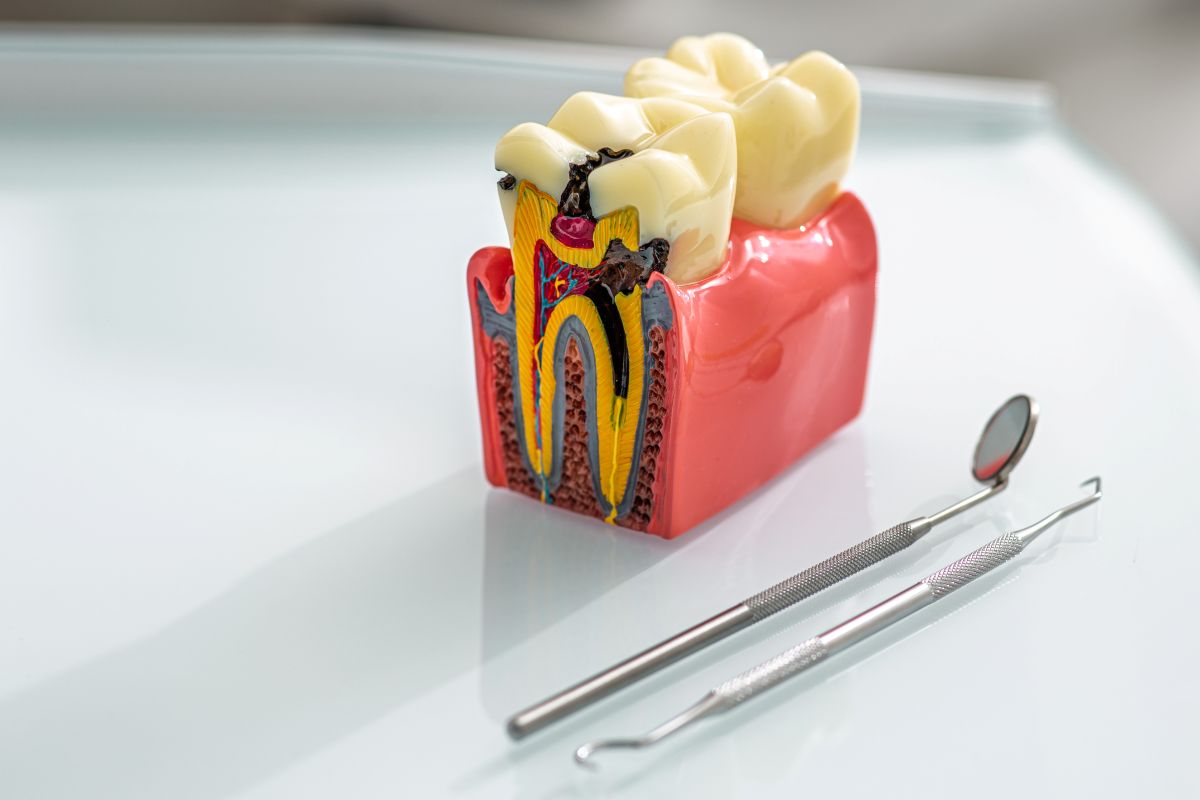
The short answer: most fillings take somewhere between 20 and 60 minutes, start to finish. But that range depends on a handful of specific factors, and honestly, the more useful question is often whether a filling is even needed yet. At Bruno Integrative Dentistry, not every cavity we see ends up in that chair, some are caught early enough to support instead.
Here’s what actually happens during a filling, what changes the timeline, and why our biologic approach sometimes changes the answer entirely.
The Quick Answer
A small, shallow, easy-to-reach cavity typically takes 20 to 30 minutes. Deeper decay, a hard-to-reach back molar, or more than one filling in the same visit can stretch that to 45 to 90 minutes. If you have several cavities in different areas of your mouth, we may split treatment across more than one appointment for your comfort, rather than numbing multiple quadrants at once.
What Happens During a Filling, Step by Step
Numbing (10 to 15 minutes). We numb the area and wait for it to take full effect. This is often the most variable part of the appointment, some people go numb quickly, others need a few extra minutes.
Removing decay (5 to 10 minutes). We remove the decayed portion of the tooth, conserving as much healthy structure as possible. Depth and size of the cavity determine how long this takes.
Placing the restoration (varies by material). Once decay is removed, we fill the space with a biocompatible material, placed in layers and cured as we go.
Polishing and bite check (5 to 10 minutes). The last step smooths the restoration and confirms your bite feels even, so nothing feels high or off once the numbness wears off.
What Actually Changes the Timeline
- Size and depth of the cavity, closer to the nerve means more careful, slower work
- Location, back molars are harder to access than front teeth
- Number of cavities being treated in the same visit
- Material used, since some cure faster than others
- How quickly you go numb, which varies person to person
The Materials We Use, and Why We Skip Amalgam Entirely
Traditional amalgam fillings set quickly but contain mercury, which is why we don’t use them. Instead, we restore teeth with biocompatible ceramics and BPA-free composite, cured in layers with a special light, similar in timing to composite resin, just without the mercury exposure. This is part of our broader biologic dentistry approach: the materials we use are chosen for compatibility with your whole body, not just how quickly they harden in the chair.
Not Every Cavity Needs a Filling
Here’s where our approach differs most from a typical “how long will this take” answer: if decay is caught at the demineralization stage, before an actual hole has formed, a filling may not be necessary at all. In that case, we use ozone therapy to decontaminate the area without drilling, paired with remineralizing support to help the tooth repair itself. You can see exactly what that earlier stage looks like in what a cavity actually looks like, and how we approach it in our biologic approach to cavity treatment.
Catching decay at this stage is exactly why routine evaluation matters more than waiting for symptoms, something we cover in how to know if you have a cavity.
After Your Filling
Some sensitivity to hot, cold, or pressure for a day or two afterward is normal as the tooth settles. Avoiding very hot, cold, or sticky foods for the rest of the day helps the restoration set fully. If sensitivity is still bothering you after a few days, or seems to be getting worse rather than better, it’s worth a follow-up call rather than waiting it out. For more on what cavity-related discomfort typically looks like and when it’s a bigger concern, see do cavities actually hurt.
Frequently Asked Questions
Can multiple cavities be filled in one visit?
Often, yes, especially if they’re small and in the same general area. If cavities are spread across different parts of your mouth, we may split treatment across visits for your comfort.
How long do biocompatible fillings last?
With good home care, biocompatible restorations can last many years, similar to or longer than traditional materials, without the mercury exposure that comes with amalgam.
Will I need time off work for a filling?
Most single fillings are quick enough to fit into a lunch break, though numbness in your cheek or lip can last an hour or two afterward, worth planning around if you’d rather not talk or eat during that time.
Schedule an Evaluation
Whether you already know you need a filling or you’d rather find out where your teeth stand before it gets to that point, we invite you to schedule a visit at our North Austin office.
Ready to experience whole-body biological dentistry? Our comprehensive new patient exam includes a full airway, jaw, and health assessment with Dr. Candace Bruno.
Book your visit